
Granite Thickness and What That Means for Your Kitchen Design
It’s Not the First Thing People Ask About
Most folks don’t walk into the showroom asking about granite thickness.
They’re looking at colors, movement, how the light hits the surface. They’re thinking about cabinets, floors, maybe a backsplash. Thickness? That usually comes later—if it comes up at all.
But here’s the thing: we are constantly educating people on the difference, because it matters more than you’d think.
And once you see it, you can’t unsee it.
The Difference Between 2cm and 3cm
In the stone world, the two common thicknesses you’ll hear about are 2 centimeter and 3 centimeter. That’s roughly 3/4 inch versus about 1 1/4 inch.
Now, that might not sound like a big deal on paper. But visually—and structurally—it changes quite a bit.
At Greenlee, we focus on 3cm material. It’s stronger, cleaner, and doesn’t require some of the extra steps that come with thinner stone.
With 2cm, you often have to build it up to make it look thicker, and that’s where things start to get a little tricky.
The Lamination Issue
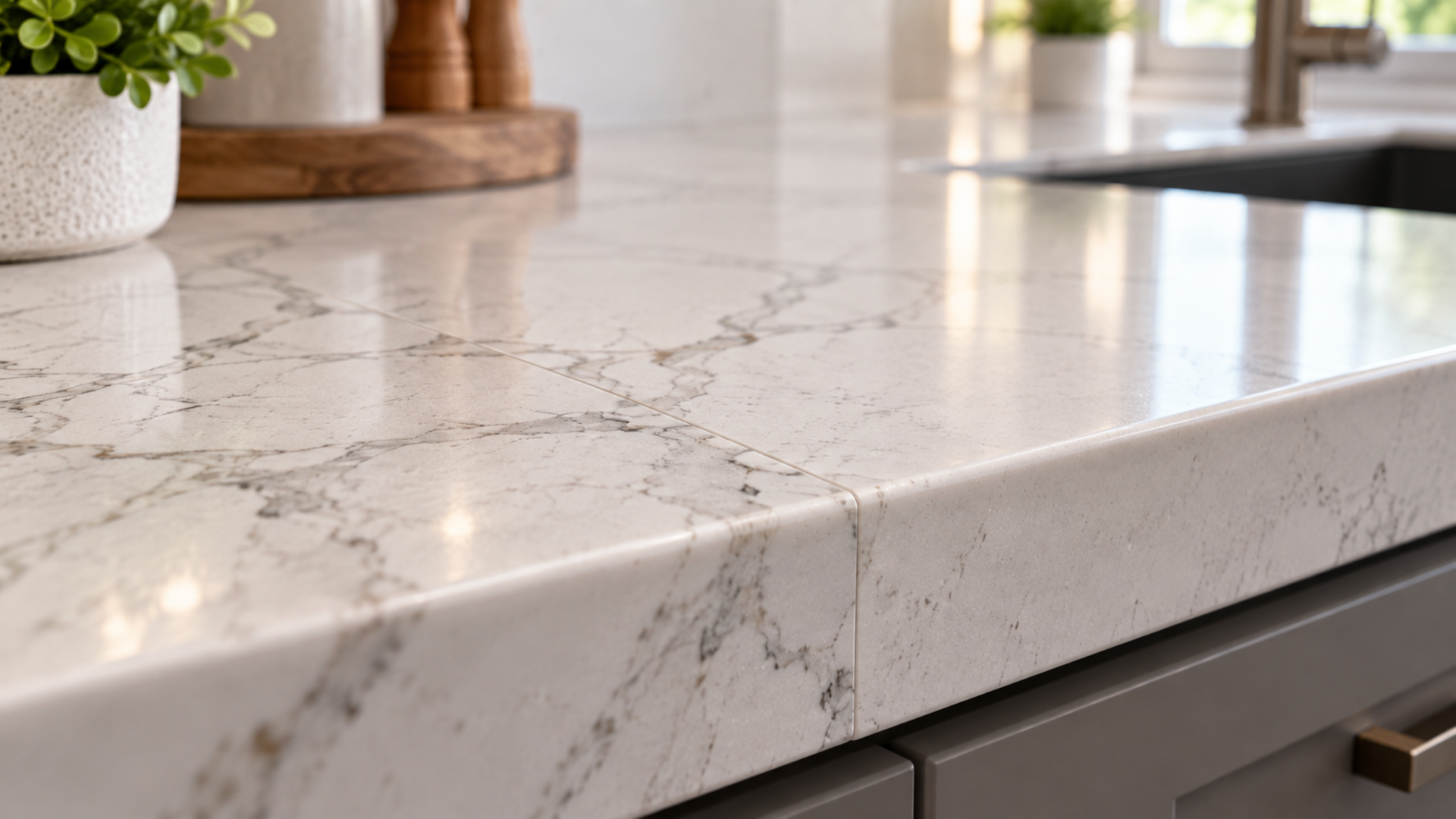
When you take a thinner piece of stone and try to make it look thicker, you laminate it. That means gluing an additional strip along the edge.
And I’ll be honest with you: It almost always shows.
You get a seam right along that edge. If the material has any kind of movement or veining, that pattern doesn’t always line up the way you want it to. So instead of a clean, natural flow, you end up with a visual break.
That’s the kind of thing that might not jump out at first, but once you notice it, it tends to stick with you.
Why 3cm Changes the Design Game
When you start with 3cm material, you eliminate that whole process.
We’re not laminating; we’re not trying to fake thickness. What you see is what you get: a solid, substantial piece of stone.
That affects more than durability. It changes how the kitchen feels.
Here’s what 3cm thickness brings to the table:
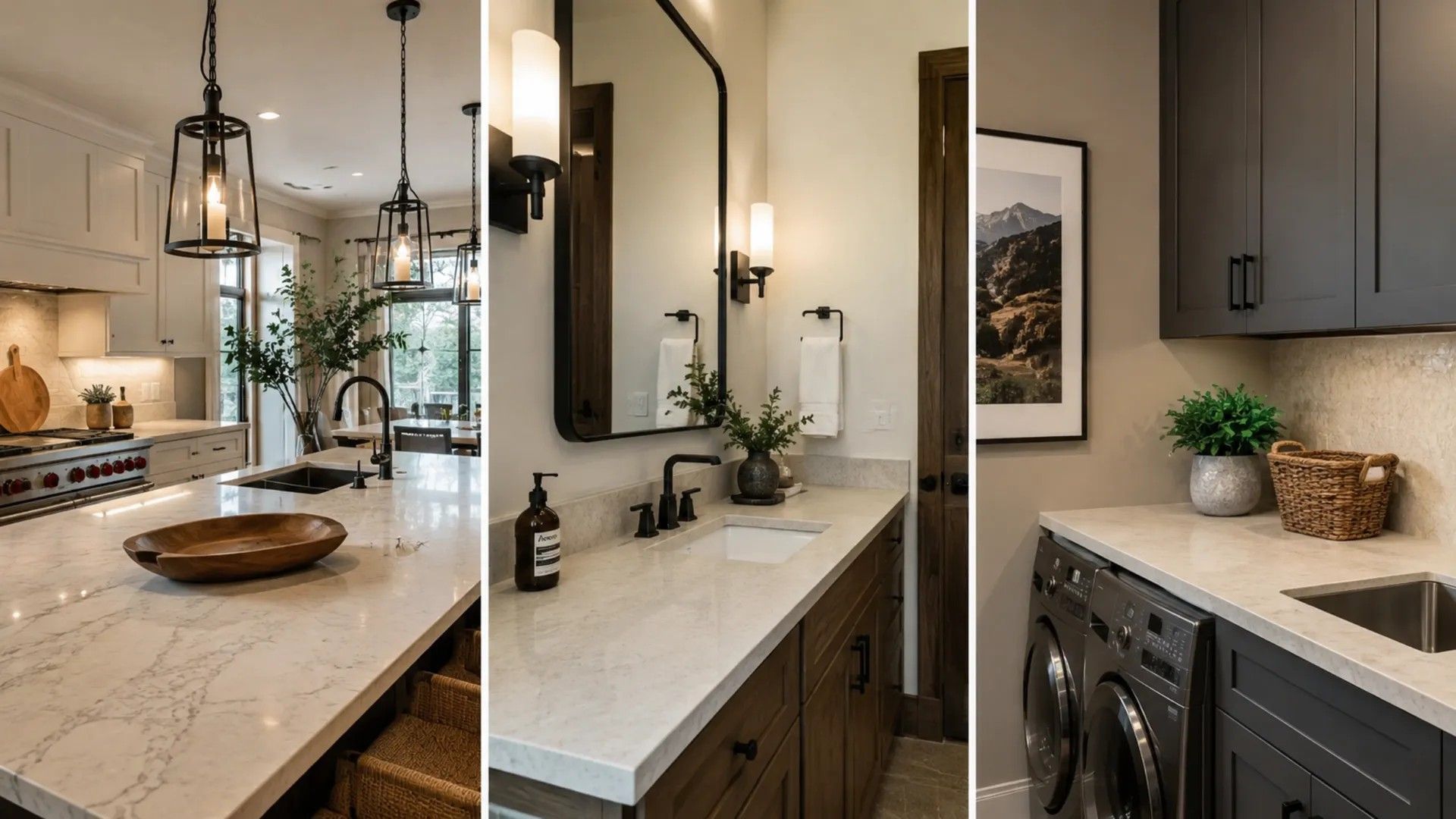
- A clean, seamless edge with no lamination lines
- Better structural integrity—no added build-up required
- More natural flow in veining and patterns
- A heavier, more grounded visual presence
- Fewer fabrication complications during install
It simplifies things, and in this business, simpler usually means better.
What About Thicker Edges?
Every now and then, someone wants a really thick-looking edge—something like an inch and a half or more.
We can do that. But even then, how you build it matters.
Instead of stacking material and creating a visible seam in the middle, we’ll typically use a mitered edge. That moves the seam right to the corner, where it’s much harder to see.
It’s a cleaner approach. Still gives you that bold look, but without drawing attention to how it was made.
And if I’m being honest, if you’re going through that process, sometimes it makes more sense to just go bigger, and make it a true statement piece instead of something subtle.
It’s a Detail—Until It Isn’t
Thickness might seem like a small detail at first, but it has a way of affecting everything around it.
The way your countertop meets your cabinets; the way light hits the edge; the overall weight and feel of the space.
It’s one of those decisions that subtly shapes the entire kitchen.
We interpret a lot of that all the time—helping people understand not just what something is, but how it’s going to look and feel once it’s in their home.
Come See the Difference for Yourself
You can talk about thickness all day, but it really clicks when you see it in person.
Run your hand along the edge. Look at a laminated top next to a full 3cm slab. That’s when it makes sense.
You don’t have to go to Phoenix. Come see us. Bring a sketch, bring a sample, or just bring an idea.
We’ll walk through it with you and help you land on something that feels right—not just today, but years down the road.
Call us to get started, or stop by the showroom and take a look.
Designing Surfaces For Your Life
Share On: