
A Better Sink Edge: How a Rounded Cutout May Help Prevent Chips
The edge around your sink takes more abuse than almost any other part of a countertop. You carry a heavy pot over, drag it into the sink, or pull it back out and catch the edge; a pan slips out of your hand; a cast-iron skillet bumps the opening. These kinds of things happen all the time without incident.
Then, one day, you notice a little chip.
We get phone calls every week from homeowners asking whether we can repair chips around a sink cutout. In many cases, they can be fixed. There are local craftsmen who specialize in that work, but even a small repair may cost a couple hundred dollars.
I’d rather see that damage not happen in the first place, but accidents will always happen. That’s why we’re now offering a rounded sink cutout designed to reduce the sharp edge that commonly gets chipped.
Why Sink Edges Are So Vulnerable
An undermount sink sits below the countertop, leaving the finished edge of the stone exposed. Our standard sink opening has a flat polished edge with a small radius along the top. It looks clean, but there’s still a defined edge where an impact can concentrate its force.
The sink is also one of the busiest parts of the kitchen. You’re washing dishes, rinsing produce, filling pots, and moving heavy cookware across that opening every single day.
Common causes of sink-edge damage include:
- Dropping a pot or pan near the opening
- Dragging heavy cookware into the sink
- Hitting the edge while lifting dishes out
- Bumping the stone with cast iron or metal utensils
- Repeated impacts in the same high-use area
Stone is strong, but a narrow edge can still chip when it takes a direct hit.
What Is a Rounded Sink Cutout?
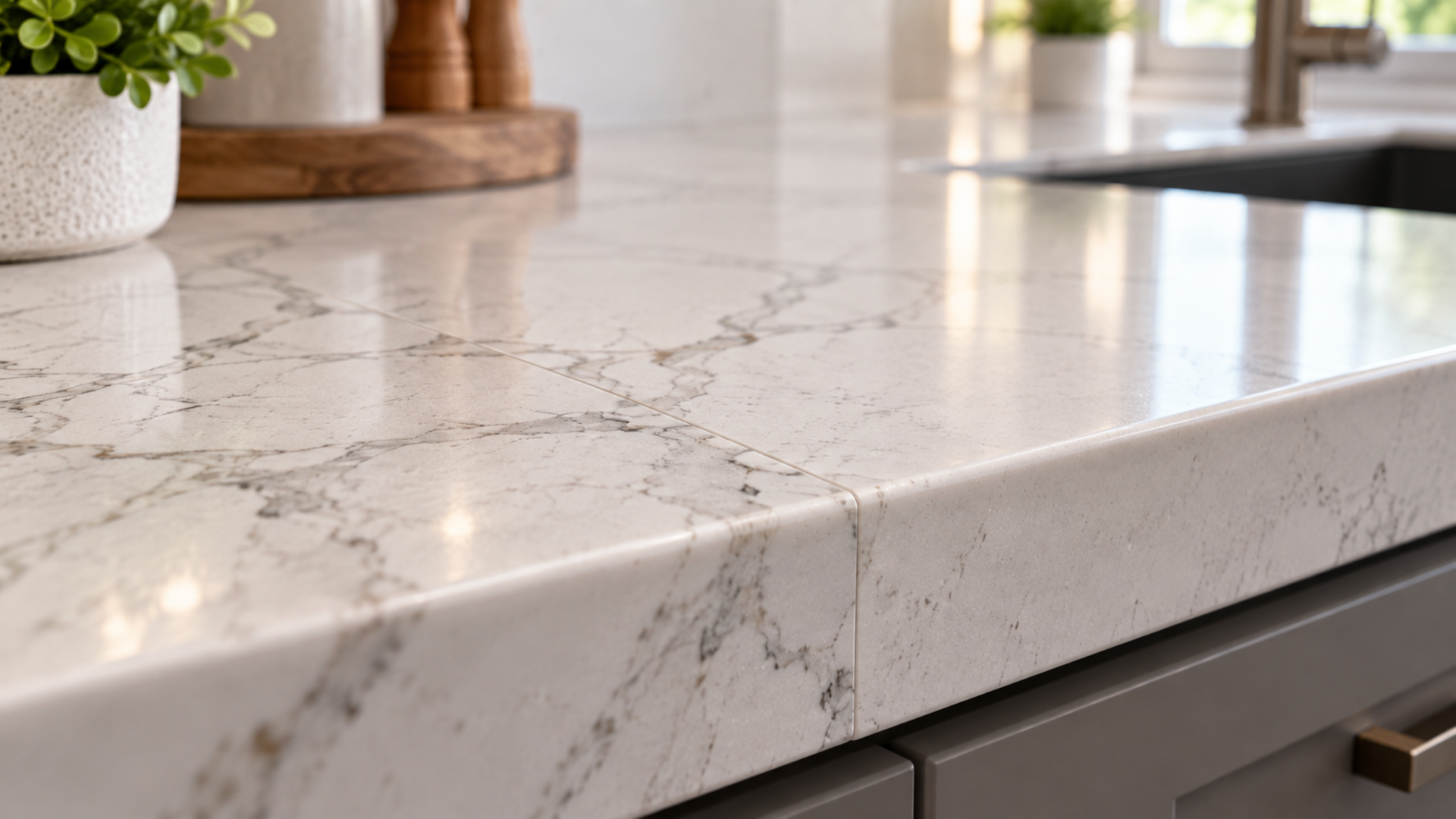
We’re offering a sink cutout with a 3/8-inch top round-over. Instead of leaving a sharper transition at the top of the opening, our tooling creates a smoother, more rounded profile, and that rounded shape takes away much of the little edge that normally catches the impact. There simply isn’t as much of a sharp point there for you to damage.
The work is completed in our shop during fabrication. We use specialized tooling to shape and polish the sink opening before the countertop leaves our facility. It becomes part of the original build, instead of something added after installation.
It’s a small detail, but it makes a meaningful difference in a place that gets used and abused every day.
Prevention Is Better Than Repair
A chip around a sink doesn’t mean the entire countertop has failed; most chips are small, and an experienced repair specialist may be able to fill and polish the damaged area. Still, a repair is a repair. It costs money, takes time, and there’s a chance it will never look exactly like the original surface.
The rounded cutout is about prevention: We’re trying to remove that vulnerable edge before the countertop ever reaches your home.
I’ve been waiting to offer this option for a while. We had the tooling, but getting it properly set up with our equipment took some work. Now that everything is running correctly, we can include the rounded profile during fabrication on many new projects.
There may be limitations with certain sink styles or countertop designs, so we’ll review the details before recommending it. The most important thing is that each sink looks beautiful and endures daily wear and tear in your home.
The Little Details Matter
Most homeowners start a countertop project by thinking about color, movement, and finish. Those choices matter, but fabrication details also affect how the surface performs over time.
That’s part of why we fabricate our countertops in-house. We can look at the material, the sink, the layout, and the way the kitchen will be used. Then we can talk through options that might help the finished surface hold up better.
You may never notice a well-made sink edge when you’re standing across the room, but you’ll notice it when you’re moving a heavy pot through the opening and don’t have to worry as much about catching a sharp corner.
Come see the rounded sink cutout in our kitchen display. Bring your plans or a sketch, and we’ll help you decide whether it makes sense for your project.
Greenlee: Designing Surfaces For Your Life
Share On: