
Granite Countertops: How to Tell Natural Fissures From Actual Damage
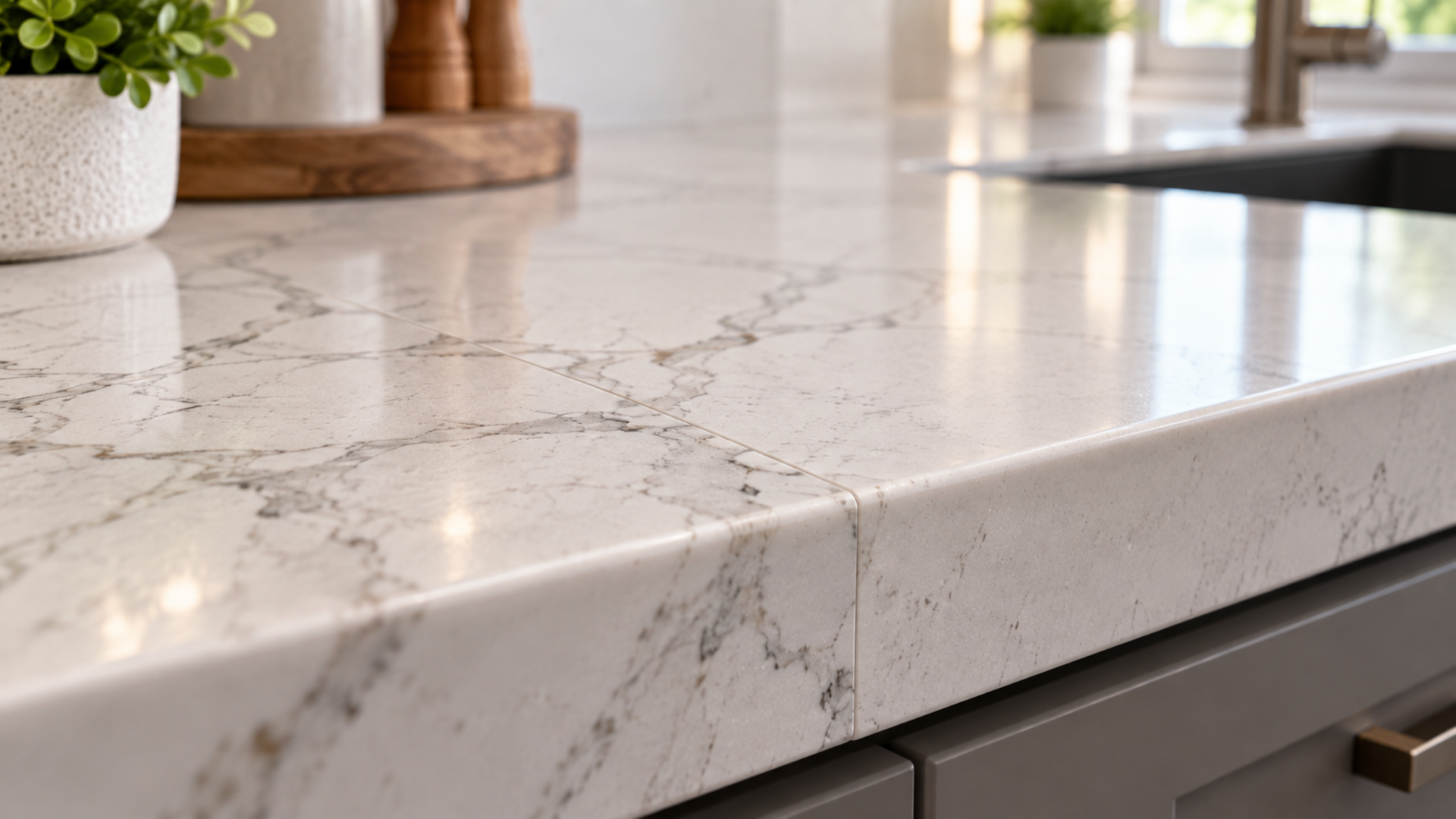
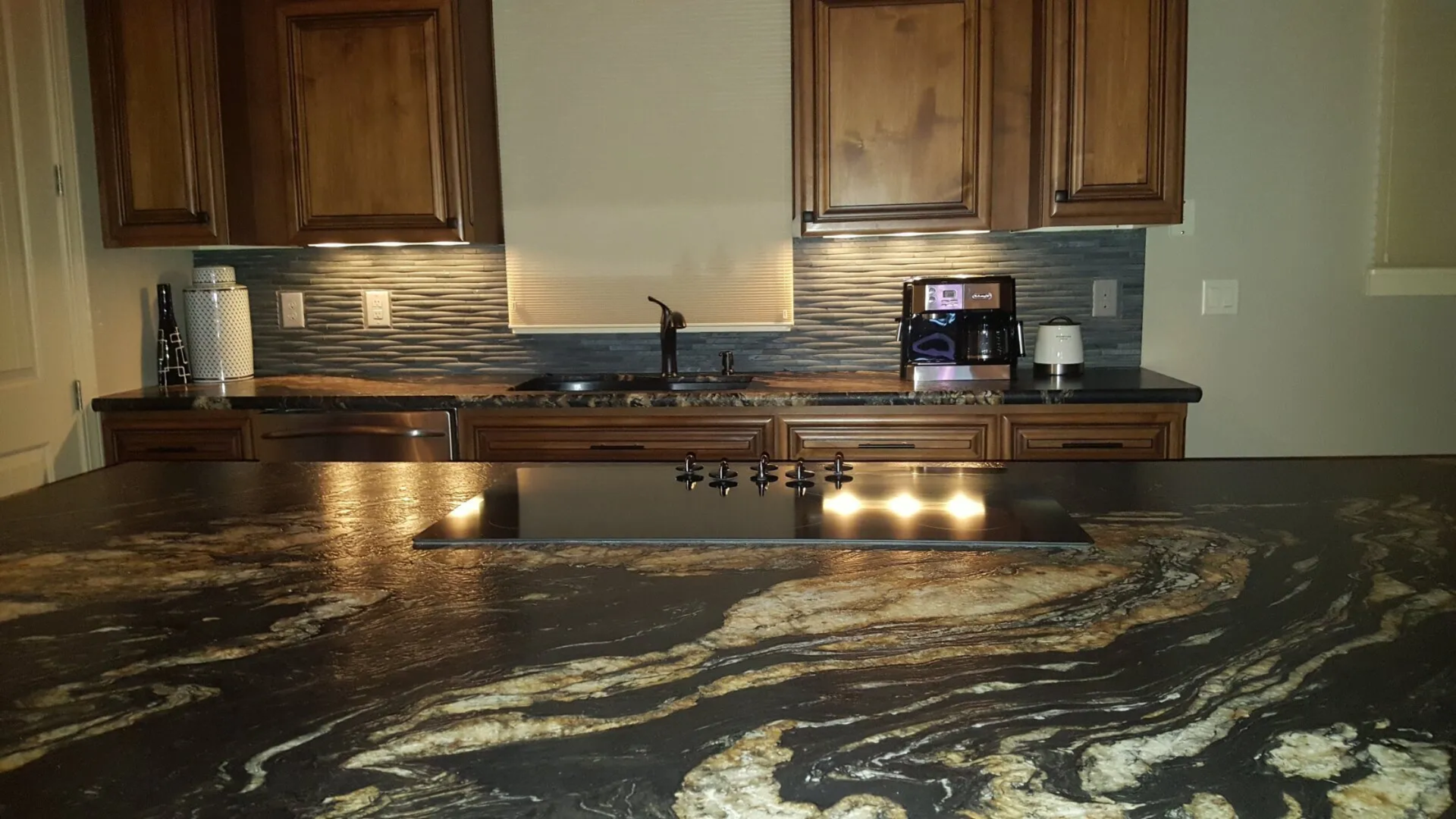
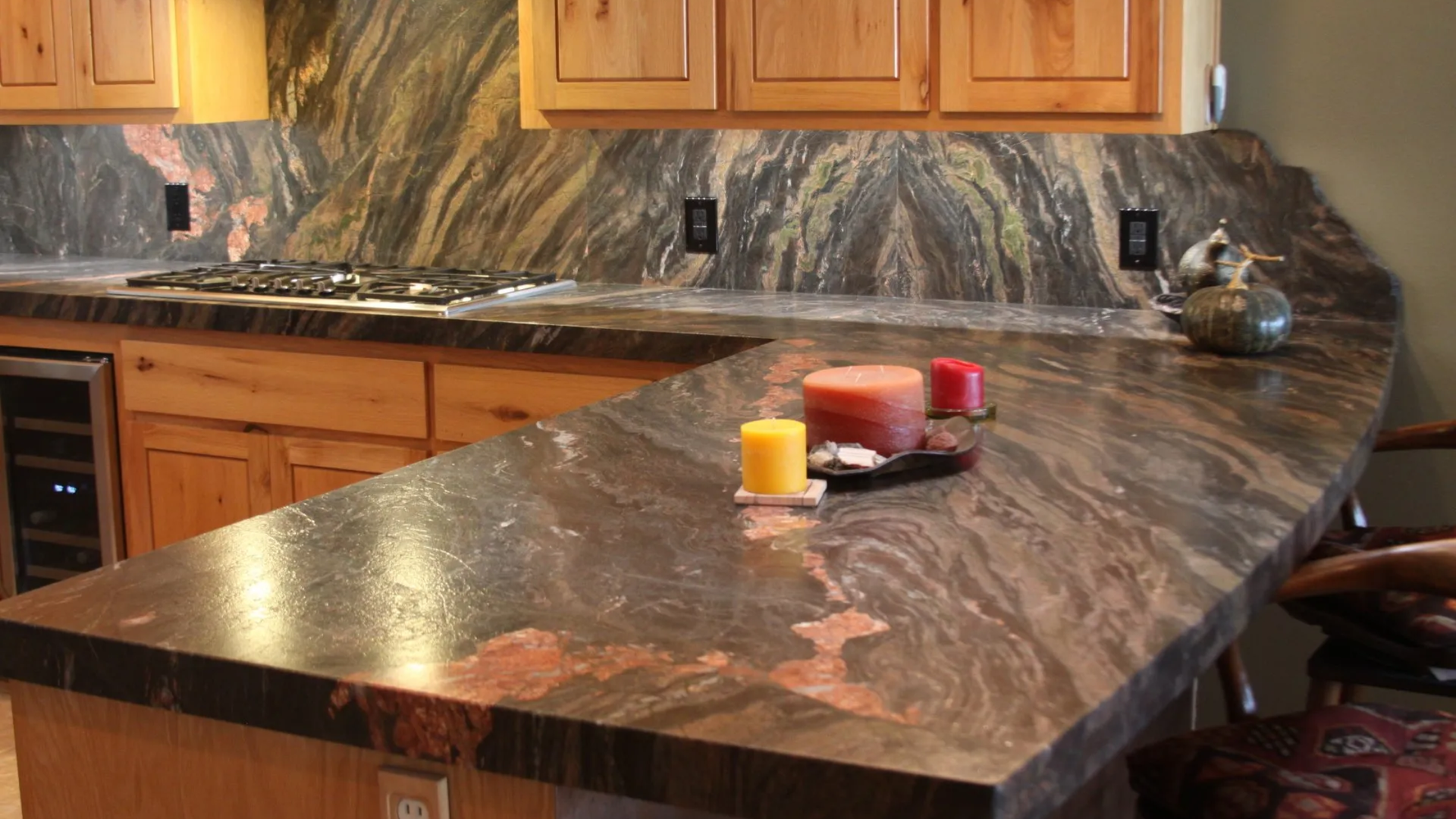
One of the things I like about natural stone is that it tells you where it came from. You’ll see movement, color changes, mineral deposits, little lines, and sometimes filled areas that have been there since the slab was processed.
Every once in a while, though, somebody looks at one of those lines and asks, “Is that a crack?”
Sometimes it is. A lot of times, it isn’t.
Fractures and fissures are just part of natural stone; that’s the way it is. Knowing what you’re looking at can help you appreciate the character of the material and recognize when something actually needs attention.
What Is a Natural Fissure?
A fissure can be a micro-fracture within the stone. When a block of granite or other natural stone gets cut into slabs, tension inside the material gets released, and areas that were binding against one another can move slightly, leaving a line that looks a lot like a crack.
Think about a windshield after it gets hit by a small rock: you may see a spider-like line inside the glass even though the surface still feels smooth. Natural stone can do something similar.
A fissure may show up as a lighter line or a visible change in the stone without creating an actual opening. You can often see it, but you can’t necessarily feel it.
Filled Areas Are Common in Natural Stone
You’ll also find areas in many slabs that have been filled during processing.
When natural stone is cut and polished, small voids or areas of separation can appear. The manufacturer may use resin or epoxy to stabilize and fill those areas before polishing the slab.
Sometimes minerals come out during processing, leaving a low spot. That can be filled as well. In some stones, you can clearly see those areas. I have natural stone where some of the fill areas are an inch and a half or even two inches across.
That doesn’t automatically mean the stone is damaged, it’s simply part of that particular piece of rock.
Signs You May Be Looking at Actual Damage
There are a few things we look for when deciding whether we’re seeing a natural feature or something that needs to be repaired:
- A noticeable height difference from one side of a line to the other
- An edge you can catch with your fingernail
- A piece of stone that has visibly separated
- A chip or void where previous fill has come loose
- Movement in an area that should be stable
A true break will often have one side of the surface lifting slightly. That physical difference is one of the clues that tells us we’re dealing with more than a natural fissure.
Yes, Natural Stone Can Be Repaired
We repair natural stone all the time.
Slabs are heavy, and they flex a little when they’re moved. Corners can break, and fill can come loose. It’s really kind of part of it when you work with natural materials.
Depending on the situation, we may glue a piece back together, add support to the back of the stone, refill an area, and surface-polish it until everything is flat again.
A good repair may end up looking very similar to a fissure that was filled at the factory. The adhesives we use are extremely strong, and the goal is to stabilize the stone while keeping the finished surface looking the way it should.
The Character Is Part of the Stone
I’m a rock hound: I fall for every pretty rock I find.
And part of what makes natural stone interesting is that it isn’t manufactured to look identical from one end to the other. Fissures, mineral changes, filled areas, and other variations are part of what makes each slab different.
If those natural characteristics really bother you, an engineered quartz may be a better fit. There’s nothing wrong with that! It all comes down to what makes you feel good in your space.
But if you love natural stone, you understand that some of those lines and variations aren’t defects; they’re simply part of the material.
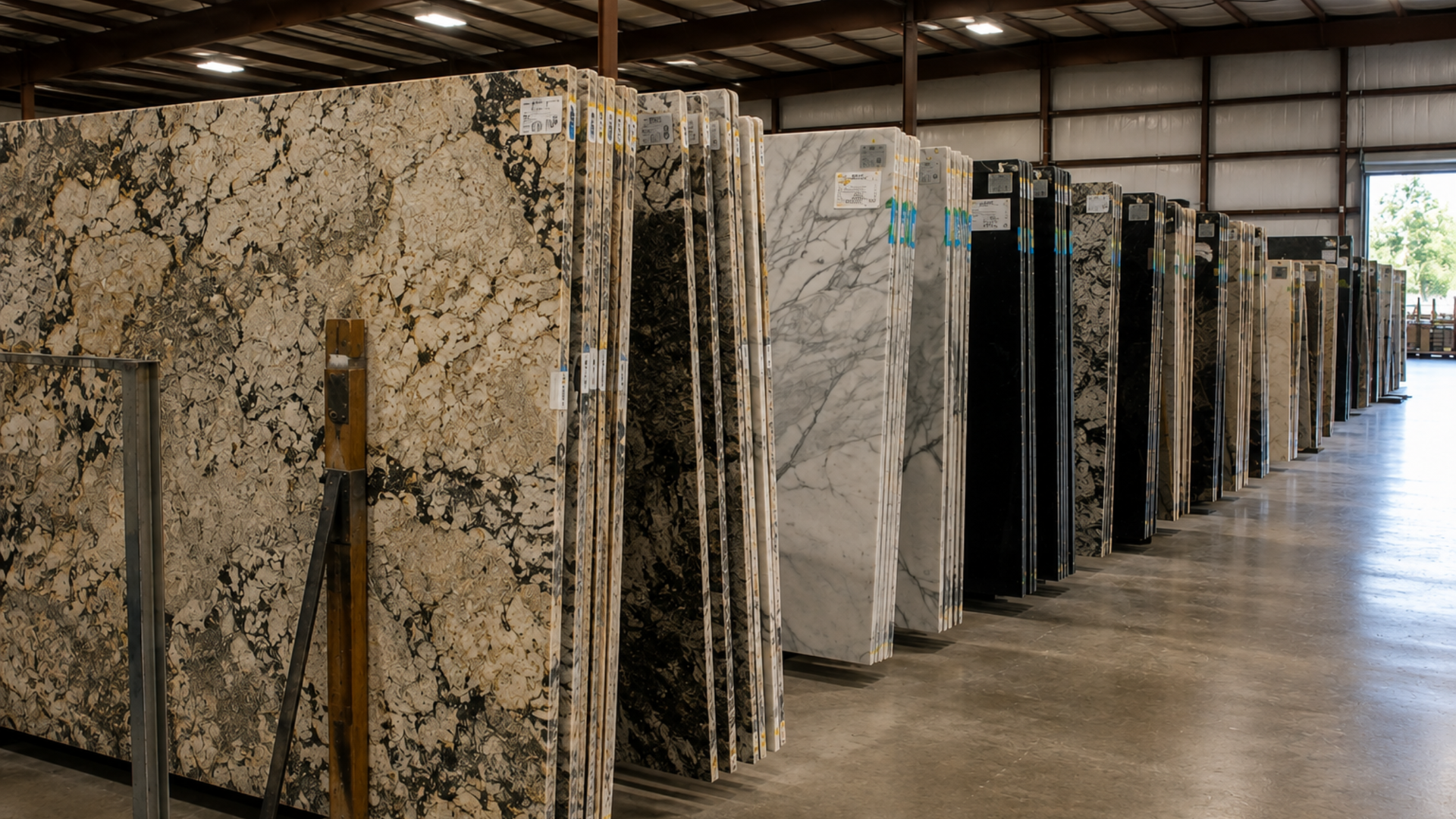
Contact us and come walk through the showroom and look at the slabs. We’ll show you what’s natural, what’s been filled, and what we look for when we inspect a piece of stone.
Greenlee: Designing Surfaces For Your Life

Share On: